Edge Brewing

Drowned ChipmunkBoise Brew Minute (Episode 10) – Kerry from Edge Brewing talks about Black Water, her imperial stout. This is a hoppier version of the style which should appeal to people who typically prefer IPAs to stouts. We also talk about some of the beers that investors in the brewery made including an Oatmeal Stout that was good enough that Kerry is brewing it now.

  • What do you think of Black Water? Is it good, too hoppy or not yet hoppy enough?
  • What other breweries allow investors to come in and brew?
  • What would you brew in a commercial brewery, if you were given the chance?
Posted in Boise Brew Minute | Tagged , , | Leave a comment

Planes at Whole Foods

On Wednesday, the local Whole Foods donated 5% of their sales to the Discovery Center of Idaho. Most of the staff of the Discovery Center spent some time at Whole Foods that day talking to customers, doing science demonstrations and thanking the community for the support. Since I’m on staff, I spent several hours there and found wonderful ways to entertain myself and others. The main way was with a toy we build at the Discovery Center, a polystyrene plane. I played with this simple flying device for way too long, but the customers and even most of the produce staff at Whole Foods seemed entertained. After a bit of practice, I got the plane to fly around in a circle and boomerang back to me.

Wednesday was a cold day and relatively few people came to Whole Foods to do their shopping, but it was still a great opportunity to talk with the community about what we’re doing and share some fun science experiments they could try at home.  Below are instructions for this demo and I’ll continue to post demos here when I have a short story to tell about them, but you can find more on WikiDemos.

Supplies

  • Polystyrene Plate
  • Tape
  • Paperclips
  • Rubber band
  • Scissors
  • Plane Template (optional)

What to do

PolystyrenePlanePlateTemplate.jpg

Template for your plane.

  1. Cut off the edges of the plate, leaving a flat circle
  2. Trace the template onto your plate or draw a similar pattern
  3. Cut out your plane
  4. Fold on the dotted lines
  5. Cut flaps to adjust flight
  6. Add rubber band to paperclip
  7. Add a paperclip to the front (you may need to tape it in place)
  8. Loop rubber band over your finger and pull back plane
  9. Launch your plane

You can adjust the flaps on the back to modify how it flies, making it better at gliding or coming back to you. If you build one, send me a photo. Good luck and have fun.

Posted in Museums | Tagged , , , | Leave a comment

Woodland Empire

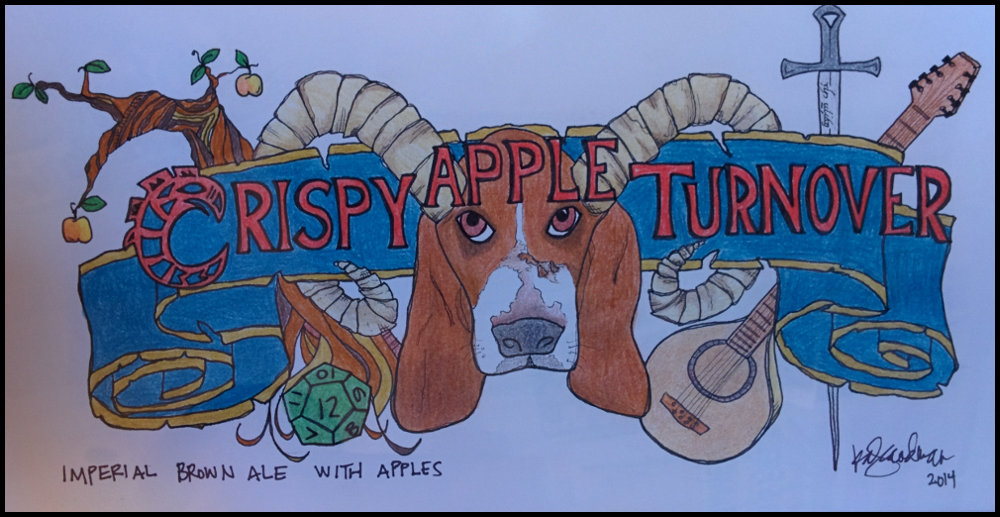
WoodlandBoise Brew Minute (Episode 9) – Rob talks to us about starting Woodland Empire and their new beer, Crispy Apple Turnover. This is their response to all the pumpkin beers typically released this time of year. We also discuss Autumn to Ashes, a smoky beer they’re releasing soon with flavor from malt they smoked using apple wood from the brewer’s backyard.

  • Are pumpkin ales over done and is an apple ale the best response?
  • How do you like the balance of smokiness in the Autumn to Ashes?
Posted in Boise Brew Minute | Tagged , , , | Leave a comment

Boise Coop

Drowned ChipmunkBoise Brew Minute (Episode 8) – Matt has been buying beer for the Coop for several years now. We sat down and talked about what beer he’s excited about arriving soon, including Deschutes Jubelale. We also discuss how he got into beer and some of the imperial stouts being release on Black Friday.

  • What’s your favorite beer at the Coop?
  • Which Black Friday release are you excited about trying?
  • Matt discovered interesting beer through Belgiums. What beer first got you interested?
Posted in Boise Brew Minute | Tagged , , , | Leave a comment

Understanding pain in running

Recently I’ve been thinking about pain and how it appears in running. There is always the pain of pushing hard near the end of a race, but there is also pain of eating the wrong thing (or not enough). Some pain gets better if you run through it and some gets much worse. Running along a trail and twisting your ankle a little is a perfect opportunity to assess this. Sometimes, the ankle gets better if you keep running (and ice when you get home), other times, more running continues to aggravate the injury. The only way to know which one this is, is to try one approach and see if it’s correct. With experience, you get better at determining which one it is, but self-assessment is never perfect.

This question of which injuries we should run through and which we must not has been rattling around in the back of my head a lot lately. I’ve been dealing with two injuries for a couple of months. At first, I thought I could run through them. It soon became evident that these were not that type of injury. I cut back on my miles and the number of runs I did. I increased the amount of time I spent icing and slowly they began to heal.

Then a week ago, I read an article on irunfar.com  One of the take-aways from the article is that building this knowledge of what pain you can run through, what is “normal” pain, can be extremely helpful in long races. Several of the training runs they recommend are ones I already do, but my focus has been on putting in the miles to decrease the pain I feel while racing. After reading it, I’m now starting to take mental note of the pain and discomfort I feel; I’m building a pain catalog. And, although I haven’t done it yet, I’m thinking about trying some of the other training runs they mention like the carbohydrate depleted runs. The idea of skipping a meal before a run sounds dumb, but I understand the reasoning behind it. If you’re going to be low on calories during a long race, it might be a good idea to understand that feeling before race day. We’ll see how if I actually convince myself to do it.

Hopefully, going forward, I’ll be even better at determining what pain I can run through and what pain requires attention. Most important of all, hopefully I can get back to training for some races this winter.

  • How do you deal with pain on runs? Ignore it, stop running, catalog it, etc?
  • How good are you at determining which pains mean stop? Any tips?
Posted in Running | Tagged | Leave a comment

Post Modern Brewery

Marvin showing the fermentation tanks at Post Modern BreweryBoise Brew Minute (Episode 7) – Just after opening their location in the old Tablerock building, Marvin talks to us about his Post Modern Pale Ale and future plans to release a hard root-beer and ginger beer. We also discuss the history of the building and how that is influencing his brewing.

  • Have you tried Post Modern Brewery and Grind Modern Burger yet? What did you think?
  • What’s your favorite Tablerock beer that you want to see Marvin recreate?
  • What do you think of their upcoming hard root beer?
Posted in Boise Brew Minute | Tagged , , , | Leave a comment

The Ram

Drowned ChipmunkBoise Brew Minute (Episode 6) – We go to the Ram and talk with Jake about his Oktoberfest beer. We discuss what makes this lager different from the standard American lager (spoiler: the difference is flavor). We also talk about the upcoming release of RyeWay 55 RPA and the current popularity of brewing with Rye.

  • What do you think about the current popularity of rye beers?
  • What other lagers have you tried with more flavor than typical American lager?
Posted in Boise Brew Minute | 1 Comment

Twist and Shout session references

crabsAs I mentioned previously, Jen Lokey, Isabel Leeder and I presented a session on the benefits of physical activity on learning. There is plenty of research available showing that all sorts of good biochemistry starts happening in the brain when we start moving (resources used during our session are sited below). This session was designed to share that information and to share what each of our centers are doing to promote physical activity.

planesAs attendees arrived, there were materials on the tables for them to begin constructing planes. Once they built either paper or polystyrene planes, they could go out into the hallway to test them and see how far they’d fly. This idea of building in one place and going elsewhere to test was described as an implicit activity, one where movement is incorporated into another primary activity.

Next we discussed what goes on in the brain during physical activity. After sitting for a while, learning about dopamine levels, it was time to get up again. This time we went out into the hall to crab walk the length of a cow’s small intestine (110′), an explicit physical activity because the stated intent was to get up and move.

Gathering back in the workshop room, Isabel shared details of a research project currently being undertaken in Miami and New York. They are examining how virtual activity done by a personalized avatar in a simulated world promotes physical activity in the girl the avatar was modeled on. The hope is that by having girls try activities in virtual environments, they will be more willing to attempt these same activities in the real world.

Finally, we ended the session by asking the participants to group up and pick a scientific concept. Then spend five minutes choreographing a (mostly) silent interpretive dance to explain the concept. There were some great examples. You can see all of them below.

Thanks to all who attended and to the other presenters. I hope everyone had as much fun in the session as I did. We’re already discussing how we can extend this topic in a presentation at ASTC 2015 in Montreal. See you there.

  • Were you in the session and have feedback for us?
  • Is there research you particularly like related to physical activity and learning?
  • What do you do to incorporate physical activity into your lessons?
  • What scientific concept would you want to see or perform as interpretive dance?

References:

  • Blakemore, C. Movement is essential to learning, Journal of Physical Science, 74 (9).
  • Chaddock, I., et al. (2010). A neuroimagining investigation of the association between aerobic fitness hippocampal volume, and memory performance in preadolescent children. Brain Research. 1358: 172-183.
  • Cotman, C., Berchtold, N. (2002) Exercise: a behavioural intervention to enhance brain health and plasticity. Trends in Neuroscience. 295-301.
  • Craig, D. Brain-compatible learning: Principles and applications in athletic training, Journal of Athletic Training, 38 (4).
  • Falls, W.A., Fox, J.H., MacAuley, C.M. (2010). Voluntary exercise improves both learning and consolidation of cued conditioned fear in C57 mice. Behavioral Brain Research, 207(2), 321-331.
  • Hannaford, C.  (1990). The brain gym option for hyperactivity, ADD, E.H., Sp.Ed., L.D., and FAS. Australian Journal of Remedial Education, 26 (1).
  • Hannaford, C. (1996). Learning, 25 (3).
  • Price, S., and Rogers, Y. (2004). Let’s get physical: The learning bnefits of interacting in digitally augmented physical spaces, 43 (1-2).
  • Spielmann, C., and Pearce, K. The Effects of Movement Based Learning on Student Achievement in the Elementary School Classroom.
  • Uysal, N., Tugyan,K., Kayatekin, B., Acikgoz, O., Bagriyanik, H., Gonenca, S., Ozdemir, D., Aksua, I., Topcu, A., Semin, I. (2005) The effects of regular aerobic exercise in adolescent period on hippocampal neuron density, apoptosis and spatial memory. Neuroscience Letters, 241-245.
Posted in Museums | Tagged , , , | Leave a comment

Boise Brewing

dc-beer-colorBoise Brew Minute (Episode 5) – Lance from Boise Brewing talks about Mr Freshy’s Fresh Hop ale and the upcoming Witch’s Tit Winter Ale (note, the name of this beer was censored for the broadcast version of this episode). We also discuss the Community Supported Brewing (CSB) model they use at Boise Brewing and the benefits of using a hop back.

  • What are your thoughts on the name of their winter ale and it being censored?
  • Is a hop back worth the extra effort or is dry hopping just as good?
  • Are there other businesses that could adopt the Community Supported model the local farms and Boise Brewing uses?
Posted in Boise Brew Minute | Tagged , , , | 1 Comment

Twist and Shout session at ASTC

At ASTC I helped present a session where we discussed how physical activity improves learning. A short video of one of our activities is below. We asked the participants to crab walk the length of a cow’s small intestine (~110′). I was impressed by how many were willing to try it. There’s always adventurous people at ASTC conferences.

I also promised to post a list of references used during the talk and as soon as I get them from the lead presenter, I’ll post them here.

Thanks to ASTC staff for the video.

Posted in Museums | Tagged | 1 Comment