Bitter Creek & Red Feather

Drowned ChipmunkBoise Brew Minute (Episode 20) – Dave and David from Bitter Creek and Red Feather talk about the changes at Red Feather. They will soon be offering beer cocktails using four semi-permanent beers on tap. Have you tried beer cocktails before? Any favorite recipes? Are these the beers you would pick for making cocktails?

Posted in Boise Brew Minute | Tagged , , | 1 Comment

Foil Boats and Coracle Racing

The Ironbridge during a minor flood with the city of Ironbridge behind

This week we were discussing activities and demonstrations we could offer as part of a collaboration between the Discovery Center of Idaho and Boise Parks and Rec. We wanted activities related to water since the Parks and Rec site will be near Boise’s new whitewater park. There are all sorts of great demos, but one that came to mind was the foil Float-a-Boat challenge.

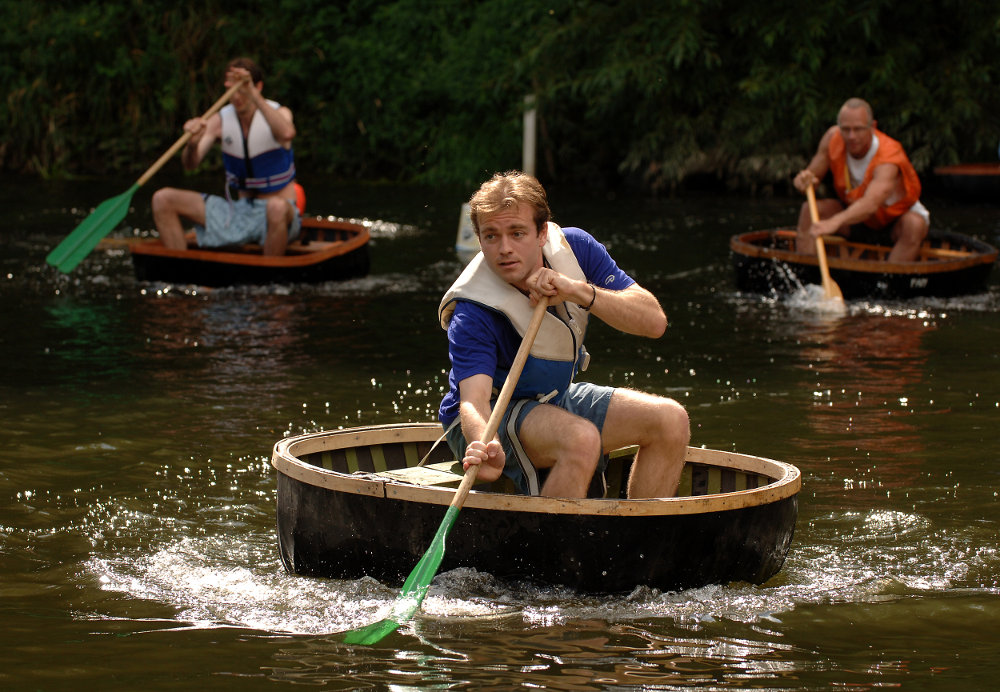
Before moving to Boise, I lived in Ironbridge, England and worked at Enginuity. Each year, we would collaborate with another local organization, the Green Wood Centre, to help with one of their big events. They would teach people to build coracles, small round boats that look like large bowls. After a weekend of building, the entire community was invited down to the River Severn to try paddling these unusual boats.

corale

Racing across the River Severn. Note that my coracle is rotated about 60° off the direction of travel. Yeah, they spun a lot.

Adults could participate in one of three races which were entertaining to watch. Because of the design, these boats could turn easily, but racing them in a line was nearly impossible for the novice paddlers. The younger ones had their own race which involved spinning in as many circles as possible in three minutes. It was nauseating to watch. I spun around enough while trying to race across the river and back that I never felt the need to just spin.

While the experienced adults were racing, I worked with anyone who wanted to try building their own (much smaller) boat out of foil. It is impressive just how much weight these simple boats can hold. Interestingly, one of the best designs for holding lots of weight looks just like a coracle.

So, how fast can you paddle a coracle? And how much weight can your foil boat hold?

Challenge

How many marbles can your foil boat hold?

Supplies

  • Aluminum foil (buying precut squares makes it easier and more fair)
  • Pool or bucket of water
  • Weights (marbles, paper clips or pennies)

What to do

  1. Fold the foil into a boat
  2. Place the boat on water
  3. Slowly add weights until it sinks
  4. Try building another boat to hold more

Inquiry Questions

  • What shape works best?
  • What boats look similar to your best boat?
  • If your boat had to carry half the weight and move quickly, how would your design look different?

What’s happening?

Buoyancy is what keeps boats afloat. It is the force of the water pushing up on the boat to counter gravity. The amount of buoyancy an object has is equal to the weight of the water the object pushes out of the way. If you crumple the foil into a small ball, it takes up little space and will sink because it weighs more than the small amount of water it replaces. If you make a canoe shape, the foil still weights the same amount, but now, takes up much more space. As long as that space is filled with air, the aluminum foil canoe will float. As you add weights, it gets pushed down in the water. Once water comes over the top, the boat is no longer “pushing” lots of water out of the way so it is no longer as buoyant and it sinks.

A canoe is designed to carry weight and cut through the water easily. Is that the best design for this challenge? What other types of boats might work better? Remember, the more water the boat displaces or pushes away, the more buoyant the boat will be and the more weight it will be able to hold.

Posted in Museums | Tagged , , , | Leave a comment

Bainbridge Island Brewing

Different wild yeast samples being cultivated

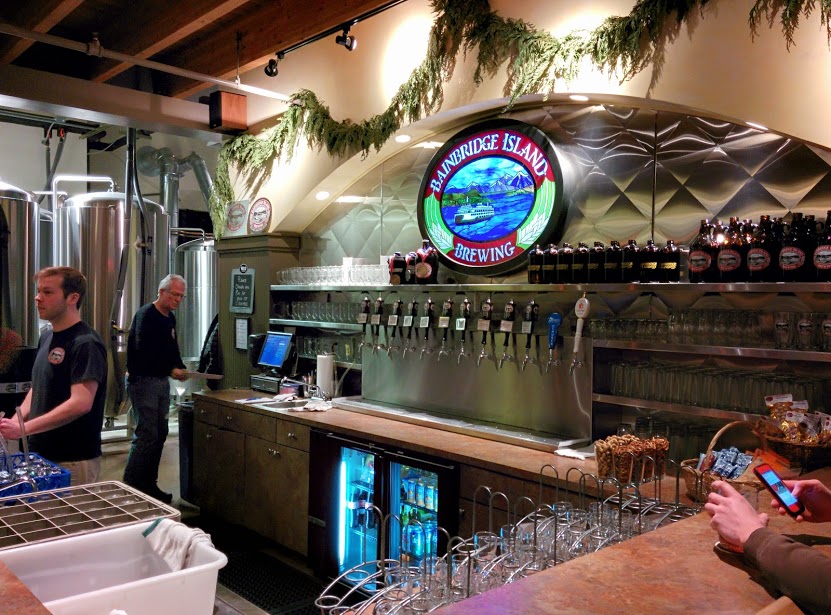
Boise Brew Minute (Episode 19) – This week we geek out a bit with Russell from Bainbridge Island Brewing. We talk about his pale ale made with a new experimental hop variety. After he describes the flavor of this hop, we move on to his latest brew, a Kettle Soured Bretliner (sic) Weisse. This beer is soured with everything from semi-wild yeast to yogurt to sauerkraut juice.

  • What’s the weirdest beer you’ve brewed or tried?
  • What flavor would you want in an experimental hop variety?

bainbridgebeer

Posted in Boise Brew Minute | Tagged , , | Leave a comment

Straw horns

Growing up, we were often doing science experiments around the house, in the yard and in (our favorite place) restaurants. We would often hear about potential experiments from others and knew we had to try them. Once we even got an idea for something to try from a half second of a panning shot in the TV show Northern Exposure. To this day, I’m not sure why my dad thought it would be a good idea to trust that fleeting moment of video enough to plug a pickle into a wall outlet (in a semi abandoned building) to see if it would glow, but that’s another story.

One experiment that we always came back to was the straw horn or musical straw. It makes such a wonderful noise and in quiet, fancy restaurants, there are few things more satisfying than seeing the expression on people’s faces when it sounds like a duck just wandered in off the street. I’m sure there are many waiters who still regret loaning us scissors with absolutely no idea how we were planning to use them. It’s such a simple experiment and those are often the best. Luckily there are so many ways you can change the straw to alter the note, that it always seems like there is something new to try. What if you cut the straw shorter? What if you punch holes in the straw? What if you attach another straw to the end? What if you try to play two at once? What if…

I hope you have as much fun with these straw horns as we have and if you get any great recordings (or get kicked out of a restaurant), please let me know.

No, they are not smoking. They just learned to play the musical straw and my arm is signaling when each person should play their straw to complete a round of “Twinkle, Twinkle Little Star”

Challenge:

Can you make music with a straw?

Supplies:

  • Plastic drinking straw
  • Scissors

What to do:

  • Flatten the end with fingers or teeth
  • Cut to a point
  • Put the pointed end in your mouth & blow

Three stages of making a musical straw.

Inquiry Questions:

  • What happens if you cut the straw shorter?
  • How could you make the note lower?
  • How can you get multiple notes from one straw?

What’s happening?

By flattening the straw, you weaken the plastic which allows it to bend easily. Cutting it to a point adds to this so that when you blow through it, the air causes the points to vibrate up and down. These vibrations cause the air around the straw to vibrate as well which is what you hear.

The length of the straw impacts the note because certain frequencies will naturally resonate within the straw. By changing the length of the straw (by cutting it, covering/opening holes or creating a slide) you can change the note it plays. Can you play a song using only one straw?

To calculate the approximate frequency of the straw, you can use the following equation:

f=(nv)/(2L)

Where f is the frequency, n is a positive integer (usually 1), v is the speed of sound (343 meters/second) and L is the length of the straw.

Posted in Museums | Tagged , , , , | Leave a comment

Sagebrush Homebrew

WeppnerBoise Brew Minute (Episode 18) – Homebrewer Bill Weppner talks about his latest beers, a doppelbock and a sparkling ale, both of which have great names. We also discuss the process of cultivating yeast and the importance of using the right equipment when homebrewing.

  • What’s your favorite beer name?
  • Any other movie quotes that would make good beer names?
  • For homebrewers, is cultivating yeast worth the added work?
Posted in Boise Brew Minute | Tagged , , | Leave a comment

Wilson Creek 50k, my first DNF

Back in the fall, I volunteered to help at an aid station for the Foothills Frenzy 50k. As a thank you, I was giving a free entry to the Wilson Creek Frozen Feet 50k. This was pretty exciting since I’d run Wilson Creek before and had a great time. Two years ago when I ran it, the conditions seemed rough. It was -7° F (-22° C) at the start which was colder than any of my training runs by about 10°. That said, because it was so cold, the ground was frozen solid which was preferable to the year before when there was 6″ deep mud in some sections. Once I started running, I warmed up quickly, had a great race and have been looking forward to running it again.

Training for an ultra takes a lot of time. I had been slowly building my base miles while getting longer and longer runs done over the weekends. I was feeling pretty good about my training and felt that a week on a boat in the Bahamas wouldn’t be optimal for racing, but wouldn’t be too bad. I was running until the day before we got on the boat and ran the two days after. I was ready with only one week before the race. It was going to be a good run.

My first day back at work, the roads were a little icy and I was still used to warmer weather, so I opted to ride my My hog... or is it a chopper?scooter. Less than half way into work, I went around a corner, hit a patch of ice and the bike slid out from under me. I went down. (Yes, mom) I was wearing my helmet and wasn’t going fast enough for any serious injuries, but the wind was knocked out of me. As I started to stand up and assess myself and the bike, the first thought that went through my head was, “I hope this doesn’t impact my race.” I checked to make sure I wasn’t bleeding and that the bike was ok. The only pain I felt was on my right chest which was odd considering the bike tipped to the left. It hurt but wasn’t too bad, so I tried to go about my day.

When my chest was still hurting two days later, I self-assessed it and decided I probably had a cracked rib. (No, mom) I didn’t go to the doctor or hospital since I knew there was little they could do other than confirm that I did indeed have a cracked rib. They might even tell me not to run, so why bother?

Friday night, it was still hurting and I had to decide what to do. I could stay at home and accept a DNS (did not start) or I could head out there and see how it feels. I knew I’d be annoyed if I decided not to do it and woke up feeling fine. Plus, the ultra running community is so wonderful and supportive, I decided to at least go to the start. It still hurt to breathe deeply when the gun went off, so I told myself I wouldn’t push so hard that I was gasping.

The first two miles felt (relatively) fine. There was minor pain but the excitement of running masked it. Soon, the trail started to climb and I slowed to a walk to keep my breathing under control. When we reached the top of the first climb, I was ready to start jogging again, but the pounding of downhill running quickly brought a new, but similar pain to my ribs. I was now about five miles into the first loop and couldn’t run uphill or down, but still felt fine when I was walking. I weighed my options: turn around and walk five miles back to the start or keep going and finish the first loop, 20 miles in total. I wasn’t going to set a PR, but could keep moving, so onward I went.

Around the eighth mile, there was a steep climb up to the top of Wilson Peak. I still couldn’t run up or down the hill and now it was warming up enough that the ground was getting muddy and slick. Unconsciously, I started walking with my left side slightly forward so if I fell, I would be less likely to land on my rib. When I realized my gait had changed, I tried to bring it back but soon decided that might be a good strategy as I continued to slip on the mud.

Soon, two friends from the Boise Area Runners, caught up with me. One was having a good race, the other was not, but they stayed together. Without discussion, we agreed that the two of us having difficulties would look after each other, while the other continued her race. By mile 15, we made an odd pair. I was hobbling along with my left side forward and trying not to breathe. She “gracefully sat” (some less kind people might have said she fell) in the mud three times in rapid succession. We agreed that we would drop at the end of the loop. It was still a long way to go, but we continued on.

With less than two miles to go, we started to see the humor in the situation and our spirits brighten. The trouble with that was that when we finally rounded the last corner and strolled into the aid station, we were in a good mood. I let the aid station volunteers know that we were dropping and they pointed out that I didn’t sound convinced of my decision. We still had 10 miles to go and my rib hurt, but if Jenny had wanted to continue on, I probably would have finished the race. I decided that 20 miles was enough for the day and realized that every step was exacerbating my injury. I was ready to accept my first DNF (did not finish). I even convinced myself that it was “the smart thing to do.” Of course, if I really wanted to do the smart thing, I probably should have taken the DNS six long, painful hours before. Too late for that now.

Looking back on the race with almost three days to reflect, I’m glad I did it. It was great to get out on the trail with all the other ultra runners and enjoy the Idaho landscape. Through the pain, the mud and the cold, the main thing I remember was the beautiful sky at sunrise. Now, it’s time to heal before the next race.

Wilson Creek race at sunrise

Posted in Running | Tagged , , | 6 Comments

Goodbye Bahamas

IMGP1708

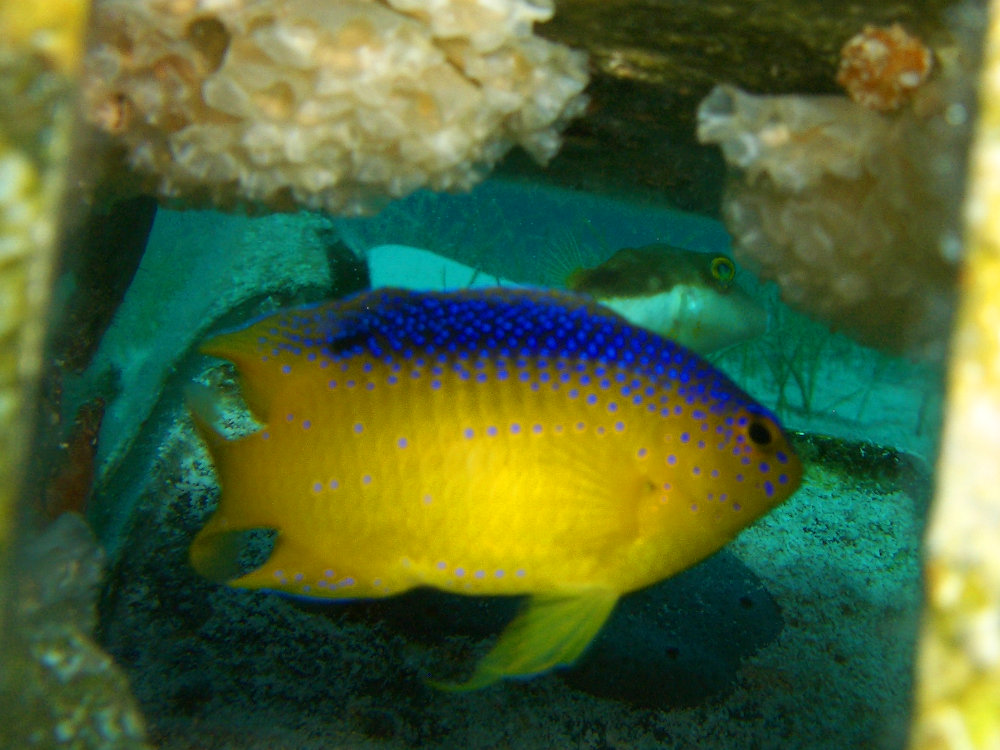
A juvenile cocoa damselfish out in the open

queen

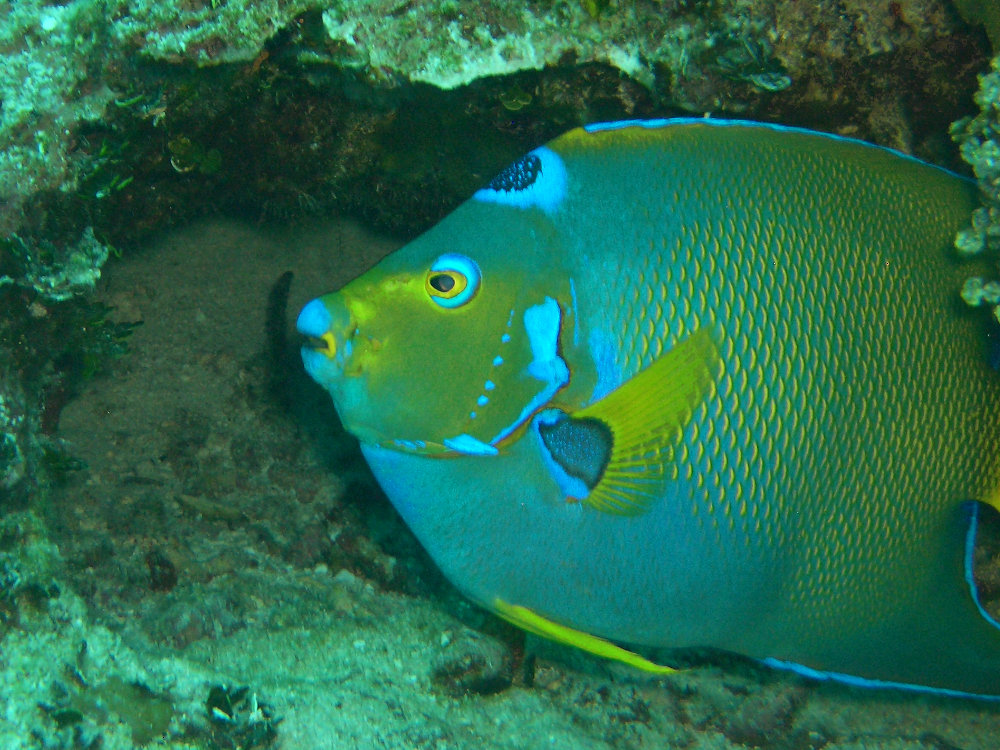
Queen angelfish just after leaving a cleaning station

The last day of diving on this trip had only two dives. A storm was moving in so the seas were getting kicked up and the wind was blowing enough to make the 65° air feel cold (it’s amazing how fast you acclimatize to warmer temperatures). Getting in the water didn’t help, it also felt cold, but there was enough stuff to look at on the first dive to distract from the chill. There were two lobsters that were happily waving their antennae around. I assumed it was a defensive measure, but they were doing it when there didn’t seem to be anything to defend against. Perhaps they were both nervous about finding themselves trying to hide under rocks that were clearly too small. Under a much larger rock, not too far away, a large crab was hanging out with plenty of room to conceal itself. The highlight of the dive, however, was the queen angelfish at the cleaning station. The iridescent blue of these fish almost forces me to take pictures of them, but the photos never turn out as vibrant as they appear on the reef.

damselfish

Juvenile cocoa damselfish

On the second dive, it was quickly apparent that the storm was starting to churn up the water as well. There was more dirt and sand in the water than we had seen on most of our other dives and the visibility was dropping rapidly. The boat was anchored 15-20′ from the reef and when we got to the anchor, it was difficult to make out exactly where the reef was. There were even more spaghetti worms on this reef and several flamingo tongues. Swimming around on top, there were dozens of Bluehead Wrasse. It was a nice enough dive, but certainly nothing exciting to see. Still cold from the earlier dive, I chilled to the point of shivering and decided it was time to end the dive. We found several sea stars in the sand as we followed the anchor line back to the boat.

That night, after we pulled into port, most of the passengers and crew went out to a local bar for some drinks. I got to try my third brand of Bahamian beer, High Rock, having already tried Kalik and Sands. We spent one more night on the boat in port and then disembarked for the final time. With several hours before our flight, we toured the John Watlings Distillery. The funny thing about this distillery tour was that there wasn’t a still and no one on staff seemed to have any idea where it was. Finally, the last member of staff I could ask knew that the rum was distilled off-site currently, but the still would be moving on-site within the next year.

We had a wonderful time and, despite the coral die-off, the diving was good. It was wonderful to get back into the water. In fact, it is encouraging me to look into diving some of the geothermally heated lakes around Idaho (still don’t want to do cold water diving). It was great to meet all the other divers on the boat and it would be fun to go diving with all of them again.

Now that we’re home, it must be time to start planning for the next adventure. Any suggestions on where we should visit?

seaGoddess

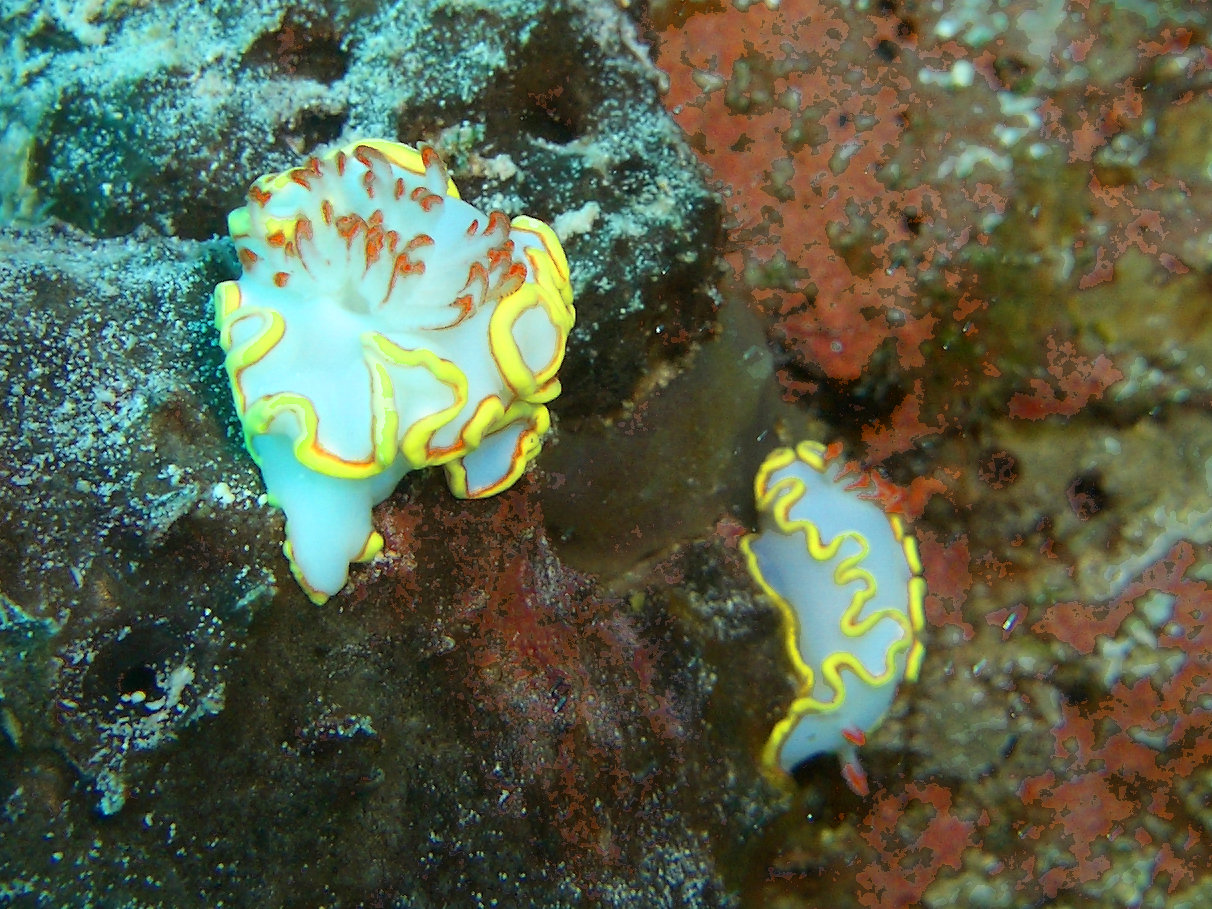
Two Red Tipped Sea Goddesses

Posted in Travel | Tagged , , , | 3 Comments

Walls, Washing Machine and Whales

seaGoddess2

Red-Tipped Sea Goddess

This was the day of diving on planes. We dove two crashed planes today. The first was a small Cessna that was mostly intact. It rested on the bottom, not far from an old fashion anchor that was said to have belonged to Blackbeard the Pirate. The anchor was teetering on the edge of a wall, a spot in the ocean where the sea floor drops away abruptly. The top of the wall was around 80′ deep and the bottom, I’m told, is around 3,000′. Swimming over the edge is an odd experience. No matter how certain I am that I’m floating in the water, neutrally buoyant and not moving up or down, when the ground falls away, there’s a moment of fear that I’ll fall away with it.

The second dive of the day was also on a wall, but this one had an interesting twist. Swimming across the reef, we found a large hole, similar to an elevator shaft, going down about 20′. At the bottom, the hole made a 90 degree turn, went forward ten feet and spit us out over a wall. Going through it felt like something from Super Mario Brothers. Cheesy 8-bit music played quietly in my head as I swam back up the wall. Once on top, we found a large spiny puffer under a rock barely big enough to hide it and a golden crinoid. This was the first crinoid I noticed on a dive. When I saw it, I thought it was a brittle star, but had too many legs. There’s a certain joy in finding a creature you’ve never seen before, then searching to find what it is.

brittlestar

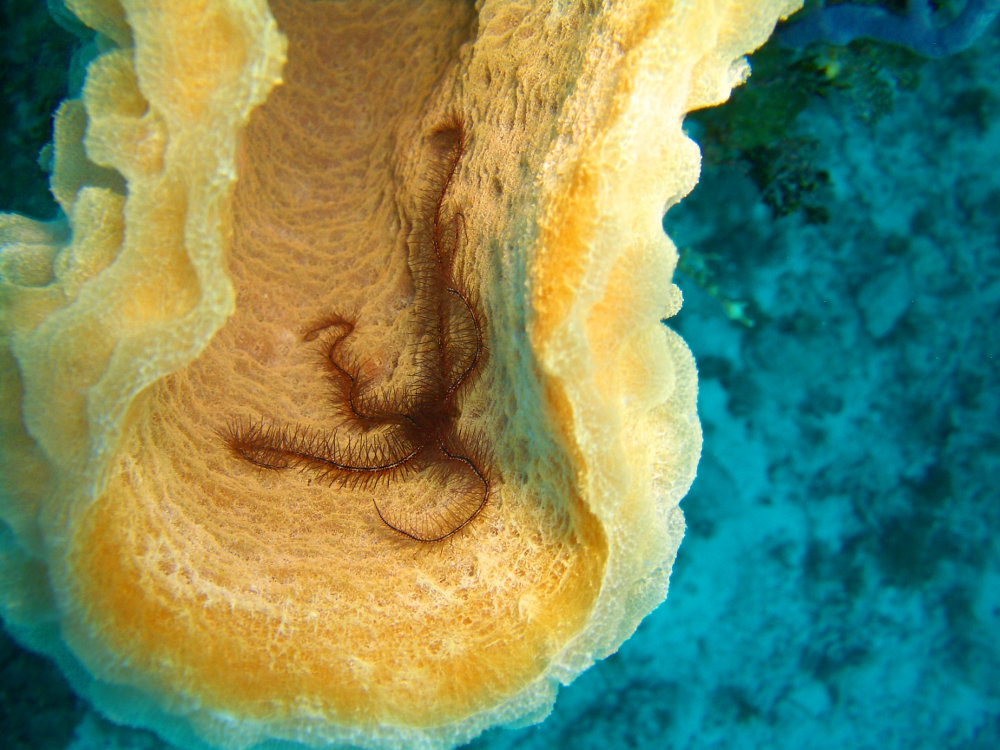
Brittle star inside a sponge

The third dive of the day was at a site called the Washing Machine and it delivered exactly what the name promised. We all jump into the water in rapid succession and swam towards a cut between two islands. The current flowing through the cut washed against a slight rise and tumbled any divers (or fish) end over end. I’m used to having to fight against the current, so when I started getting flipped over, I tried to stay upright, then remembered this was the main reason for the dive and allowed myself to be flipped twice. The rest of the dive zipped by as the current continued to push us quickly over small separate coral heads. When there was something to look at, we would kick hard against current and almost be able to stay in one place. Inside one of the large barrel sponges, there was a small brittle star. Everything else was a blur.

As we continued to make the crossing back towards Nassau, we saw two more dolphins playing beside the boat. They didn’t stay long, only ten seconds or so, but it was longer than the pilot whales we saw in the distance. They surfaced just long enough to be seen, then ducked back under the water. Even so, it was amazing to see them.

bandedShrimp

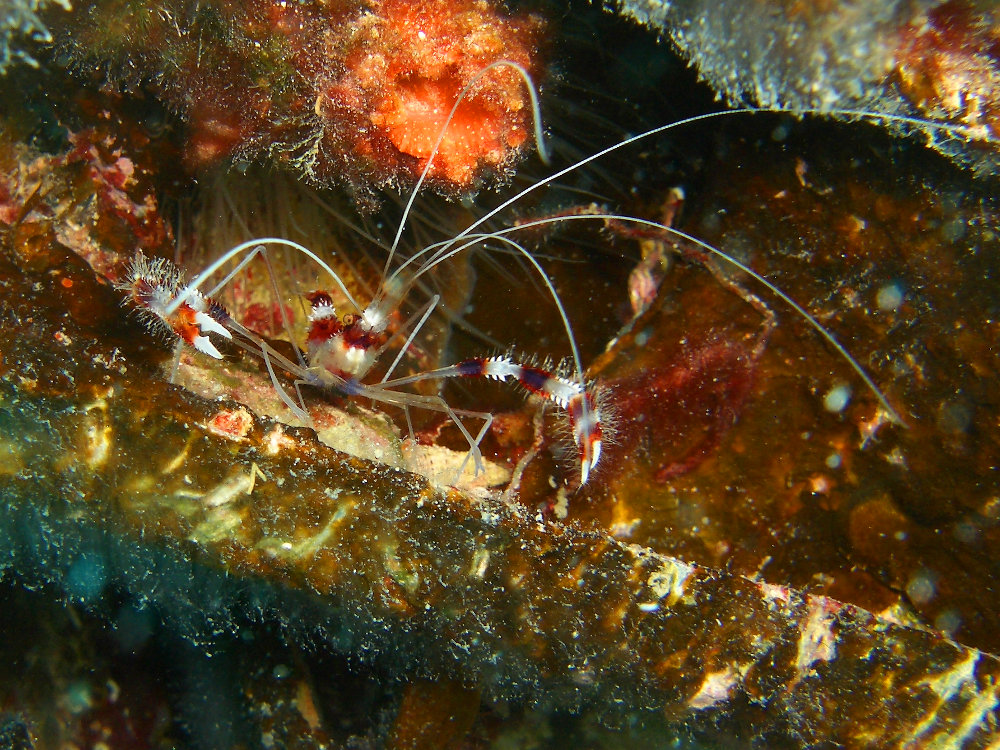
Banded coral shrimp

We started the day on a plane wreck and ended it on one as well. This time we went back to the Smugglers’ Plane for a night dive. It was amazing to see the different creatures that were out once the light went away. I was one of the first divers in the water and was greeted by a large sting ray directly under the boat. When I looked under the plane, there was a lobster staring back at me. There were more rays and lion fish out tonight than any other dive on this trip.

As more divers got in the water, the small plane got crowded with lights sweeping over and under all parts. To avoid getting kicked, Dom and I went away from the plane with one other diver we were paired with on this dive. The three of us tried to see bioluminescence by turning off our lights and waving our hands through the water. I’m sure, if any of the other divers noticed us, we look weird. It was still too bright so see any glowing microbes, so we flicked out lights back on. When we did, the krill started swarming around the beams. We sat on the sea floor with out lights in front of us, the krill gathered and soon the squirrel fish gathered to catch the krill. This was cool to see, but also bizarre because for a few seconds after the fish swam through the light, they couldn’t see anything. One even ran into my arm. It was a memorable way to end a great day of diving and the last full day of the trip.

dusters

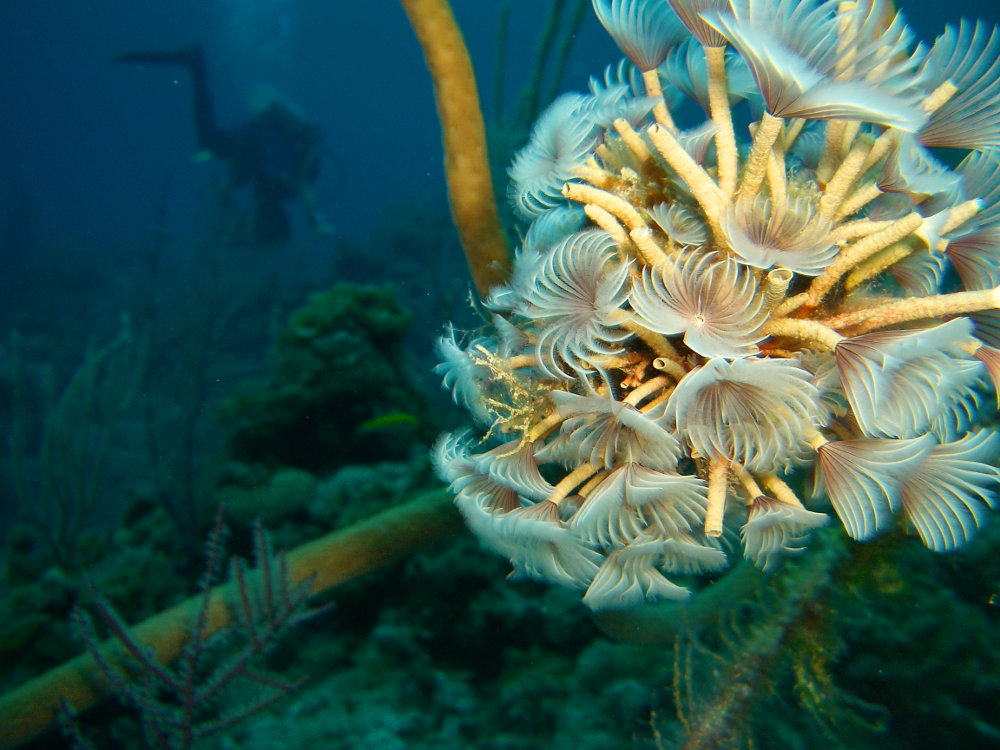
Feather duster worms with a fellow diver in the background

Posted in Travel | Tagged , , | 2 Comments

Mac & Jack’s

IMG_20150102_093405Boise Brew Minute (Episode 17) – Ken at Mac & Jack’s Brewing talks about their flagship beer, African Amber, an unfiltered, dry-hopped amber they created near 20 years ago. He tells the story of the brewery getting started about how decisions made at the beginning for cost reasons are now done out of necessity.

  • Have you tried African Amber or any of their other beers that appear in Boise?
  • Do you visit breweries when you travel? Any favorites?
Posted in Boise Brew Minute | Tagged , , , | Leave a comment

Sharks

circle

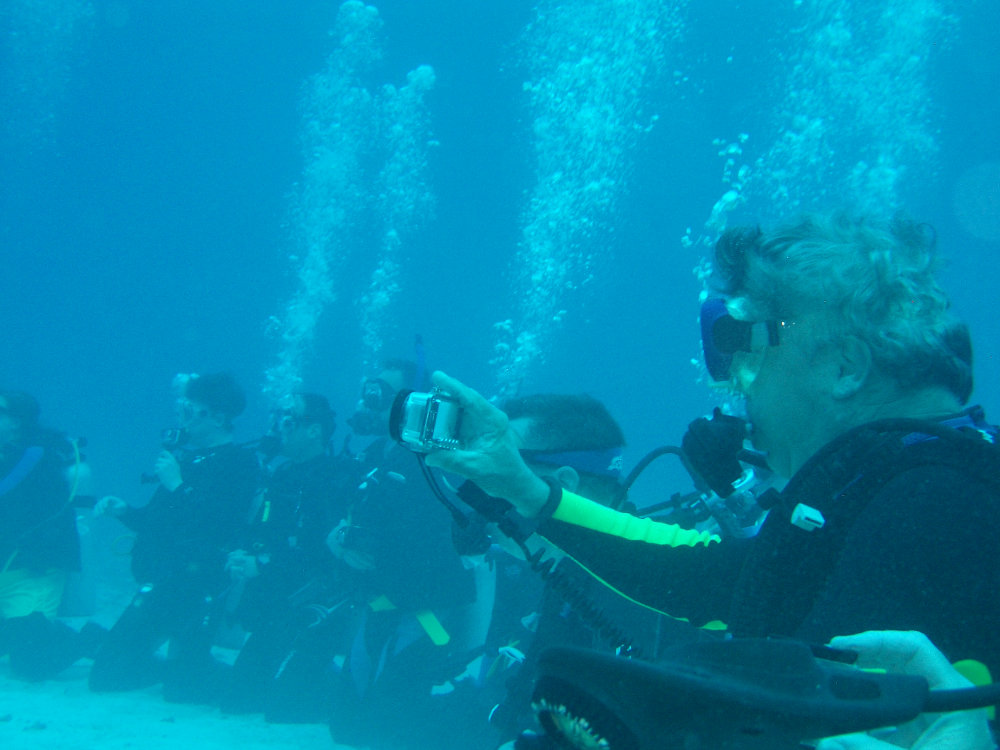
Divers watching the shark feeding

This morning started like the others with a quick breakfast, then in the water. The first dive site was called Swim Thru City and although there were many swim-throughs, we didn’t actually swim through any of them. Instead, we spent a couple of minutes checking out a large Coral Clinging Crab. It was tucked into a hole in the rock, that appeared just big enough for it to hide in. When I got out the camera for a photo, it crawled far enough back into the hole that I couldn’t see it. I thought briefly about sticking the camera (and my hand) into the hole for a great photo, but, remembering the size of its claws, decided against the idea.
Out on the sands, away from the coral, there was a small field of Garden Eels. They too were fun to watch. From a distance, they looked like grass swaying in the current, but as we approached for a closer look, the grass got shorter and shorter until it disappeared into the sand completely. It’s not until we sat on the sandy bottom and waited that the small eels slowly, cautiously poked their heads out and looked around. We waited long enough to see them come out and start grabbing bits of food that go floating by on the current, all the while keeping a weary eye on us.
The other group of fish that let us get somewhat close were those at cleaning stations. We spotted several cleaning stations on this dive where fish would sit on a rock and let smaller fish pick parasites off them. The large fish would open their mouths and the smaller fish would swim in the mouth and out the gills, cleaning all the way. In the ocean where every big fish seems to be trying to eat a smaller fish, it is wild to see these stations where the small fish willing swim into the mouths of bigger fish. One of the stations on this dive was so popular, two groupers were lined up waiting their turn.
The second dive of the day was the obligatory shark dive. As we prepared to jump in the water, the crew pulled out a five gallon bucket with frozen fish bits in it. They drilled a hole through the fishy ice block and tied it to a line. We all jumped in first and got situated on the bottom before the feeding frenzy began. The sharks had clearly seen this show before and were circling under the boat before anyone got in the water. Since we didn’t have food, they mostly ignored us. Once the guide with the chum-cicle dove in, the sharks, trigger fish, remoras, tuna and any other large fish in the area were focused almost entirely on the treat. For safety’s sake, it was on the mid point of a 20-30′ line. At one end was the dive guide and at the other was a float. When she got to the bottom, she clipped the line onto the mooring and got out of the way. For about 10 minutes, all the large sea creatures pecked, nibbled and gnawed at the frozen treat, trying to break off large pieces. In the process, smaller pieces filled the water around them and smaller fish swooped in for the table scraps. Eventually, it got small enough that one large shark came in, grabbed it, shook hard enough to break it free of the line and swallowed it whole. It was cool to watch for 30 seconds, but quickly felt like we were at a zoo. I go diving for the same reason I hike and backpack which is to see wildlife in their natural setting and this wasn’t what I was looking for. On the other hand, it did give me an excuse to sit on the bottom and practice blowing bubble rings (picture smoke rings ascending through the water column). In the middle of the ice pecking frenzy, I managed to get one of my best bubble rings ever. It rose 10-15′ before breaking into smaller bubbles. I often find simple things so entertaining.
On the final dive of the day, I spotted two Beaded Crinoids and a Spaghetti Worm, neither of which I had see before. The crinoids looks like delicate sea stars with arms poking out of the rocks. If you touched it (and I would never touch anything underwater, it’s against the law in the Bahamas), it would curl around your finger, sticking to you as if by Velcro. The Spaghetti Worm looked like fishing line. I’m not sure what Bahamian law says about picking up trash which still includes touching things underwater, but I reached out to collect the misplaced monofilament. When I touch it, it didn’t feel as stiff as fishing line typically does, which was odd, but not as odd as the fact that it started contracting and getting pulled back into a hole. It turns out, that’s how these worms feed. They wait for very small things to get stuck on the fishing line-like tentacles, then pull it in for a meal.
Rather than going on a night dive, we headed into port at Cape Eleuthera. We feed the Nurse Sharks and Bull Sharks that hang out at the end of the dock where the fish get cleaned, then went for a drink before dinner. After dinner, most of the passengers and crew of our boat join those on our sister boat for a bonfire on the beach. Watching a bunch of sailors, who typically try hard to prevent fires from breaking out, try to light a bonfire was simultaneously entertaining and frustrating. First, a lighter was used, but there was a lack of tinder or kindling so not much lit. Then a can of Off Bug Repellent was used with the lighter as a flame thrower, still to no avail. Next came a road flare, but again, there was little to light. When a can a diesel arrived, I pulled my chair away for the fire pit, but should have leaned in because I was about to see one of the most amazing things ever. The diesel fuel was dumped on the road flare and everyone expected the bonfire to really get going… instead, the diesel managed to extinguish the road flare. I think I knew this was theoretically possible, but never expected to see it happen. Finally, as the group went back for yet another can of diesel, a few of us with more camping experience moved in and got the fire going without any additional materials.
After about two hours, we were about to head back to the boat when someone pulled out fire poi. Dom and I have both spun fire once before and when these came out, we had to try again. Had we had a chance to practice before they were flaming and whirling around our heads, we might have been able to remember more of the tricks we learned years ago, but as it was, we each successfully spun (meaning we didn’t die or burn anything down) for a couple of minutes. Such a fun end to the evening. Can’t wait for tomorrow.

shark

Caribbean reef shark swimming by after the feeding

Posted in Travel | Tagged , , , | 4 Comments